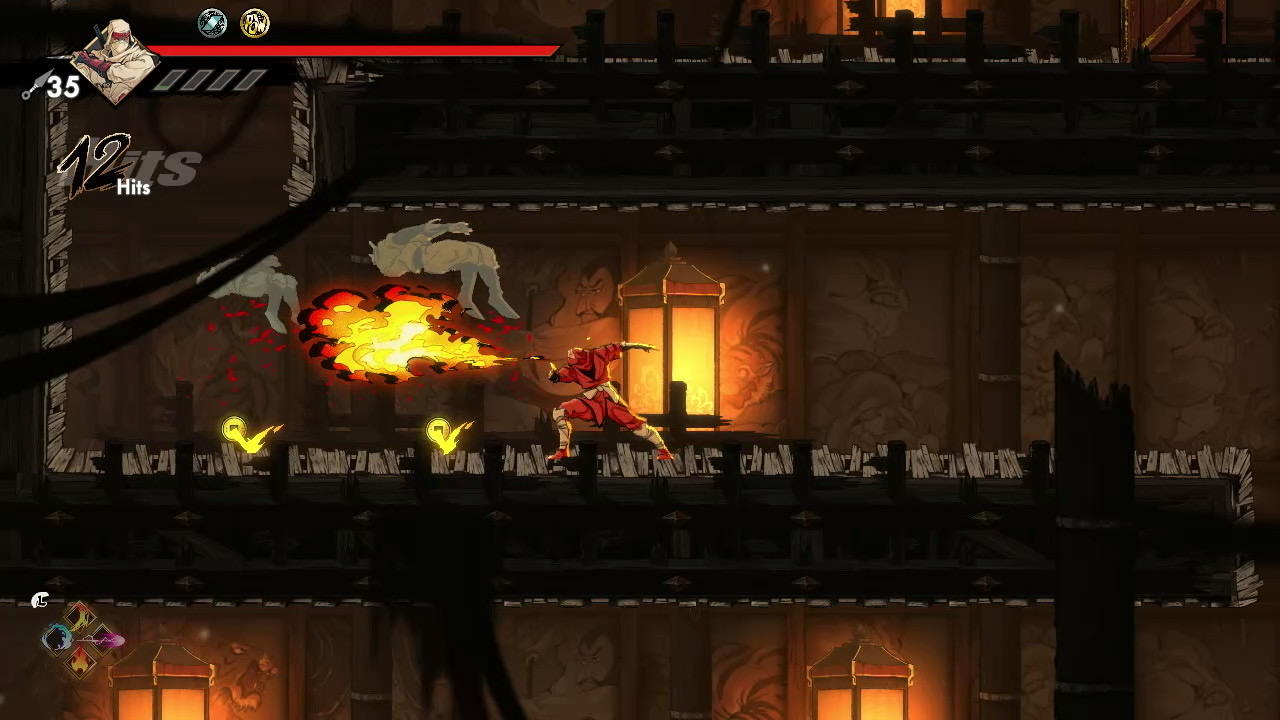
Shinobi: The Art of Vengeance is, without question, Sega’s most unexpectedly impressive release this year. It revitalizes the classical Shinobi formula with a fast-paced platform structure, a more elaborate combat system, and a distinct visual identity. The result is a sharp, forward-moving action platformer that blends metroidvania progression with side-scrolling stage design.
The story is the simplest and weakest component, so it is best addressed first. True to the series’ roots, the protagonist is Musashi, leader of his clan, who stands against a technologically empowered authoritarian force known as ENE Corp. After the corporation’s dictator, Lord Ruse, decimates Musashi’s village and transforms civilians into monstrous bio-engineered creatures, Musashi sets out on a direct path of vengeance. It is a traditional revenge arc presented through SNES-era narrative framing: brief pre-stage dialogues, short monologues, and light exposition between arcs.

The cast includes only two NPC allies who accompany the journey narratively rather than mechanically. Most battles are structured around Musashi’s solitary struggle. The plot rarely becomes gripping, yet ENE Corp’s experiments, Lord Ruse’s background, and the thematically aligned level designs prevent the narrative from fading into irrelevance. Musashi himself remains silent, leaving the villains and NPCs to deliver most of the spoken lines.
The soundtrack supports the game’s atmosphere effectively. Each biome and stage has its own tone, and boss fights receive dynamic tracks that shift with the pace of battle. The audio work keeps the action alive and complements the visual and mechanical intensity. Overall, the OST is consistently strong.
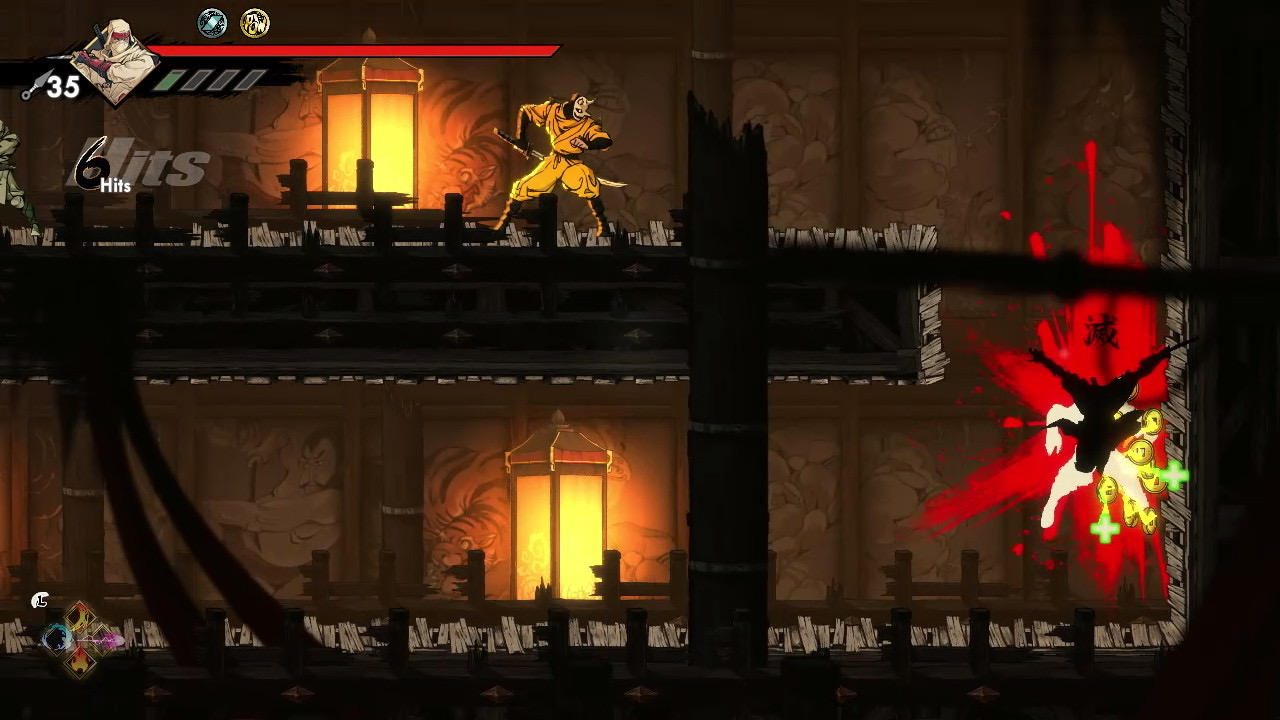
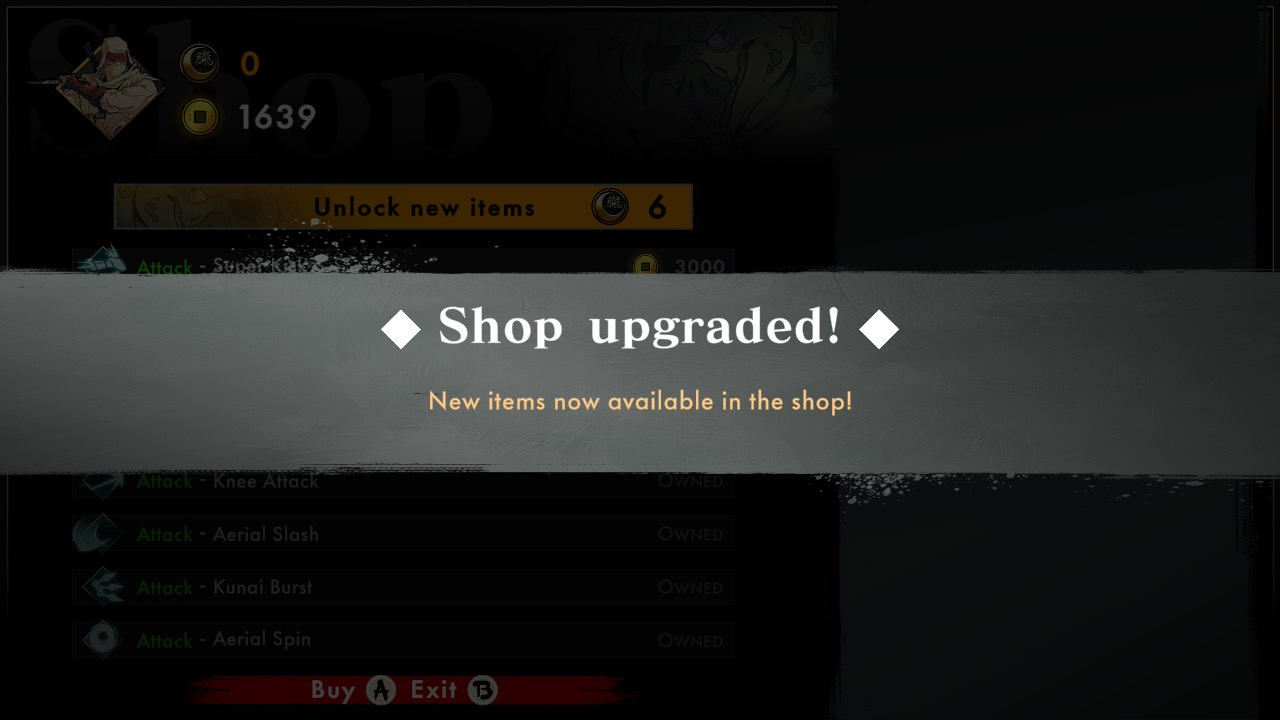
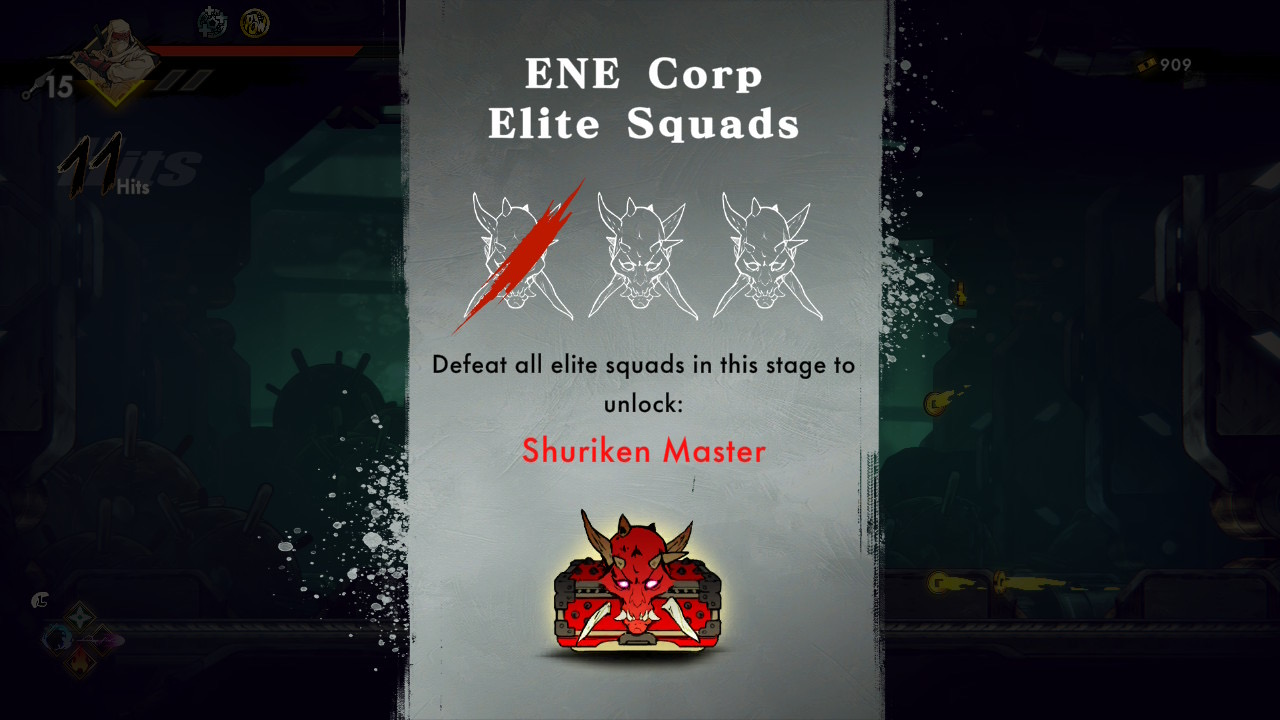
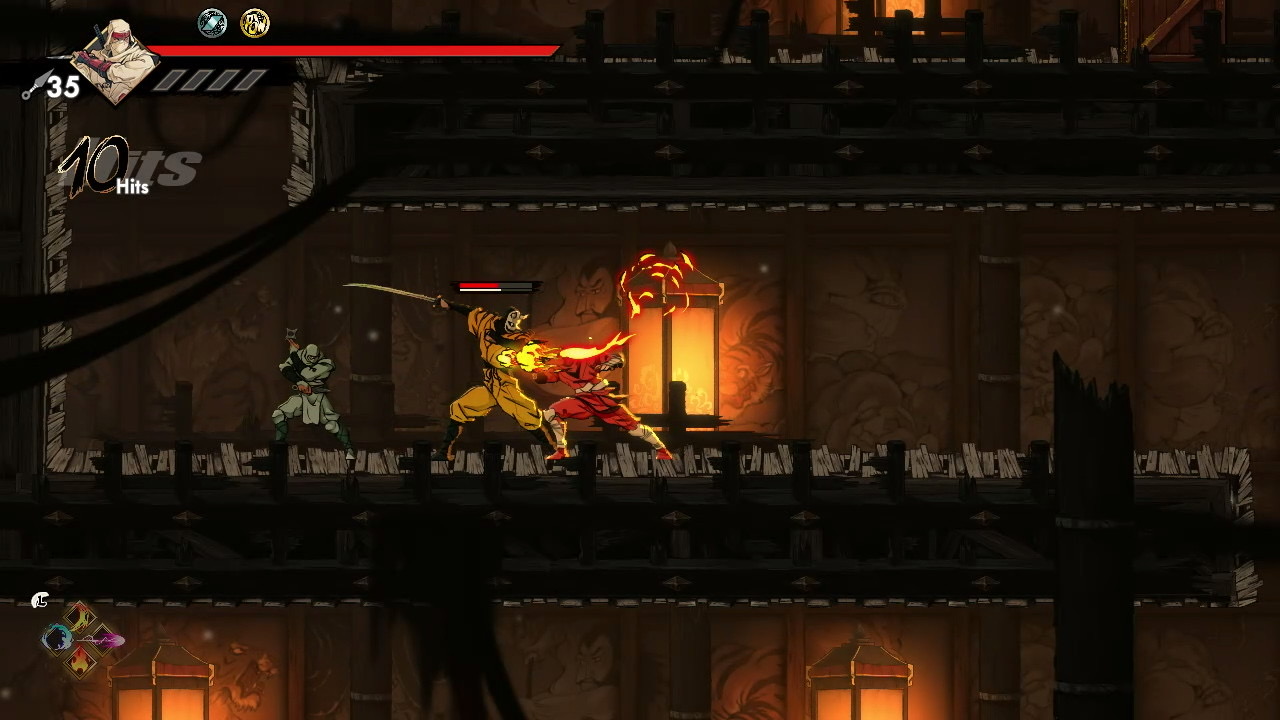
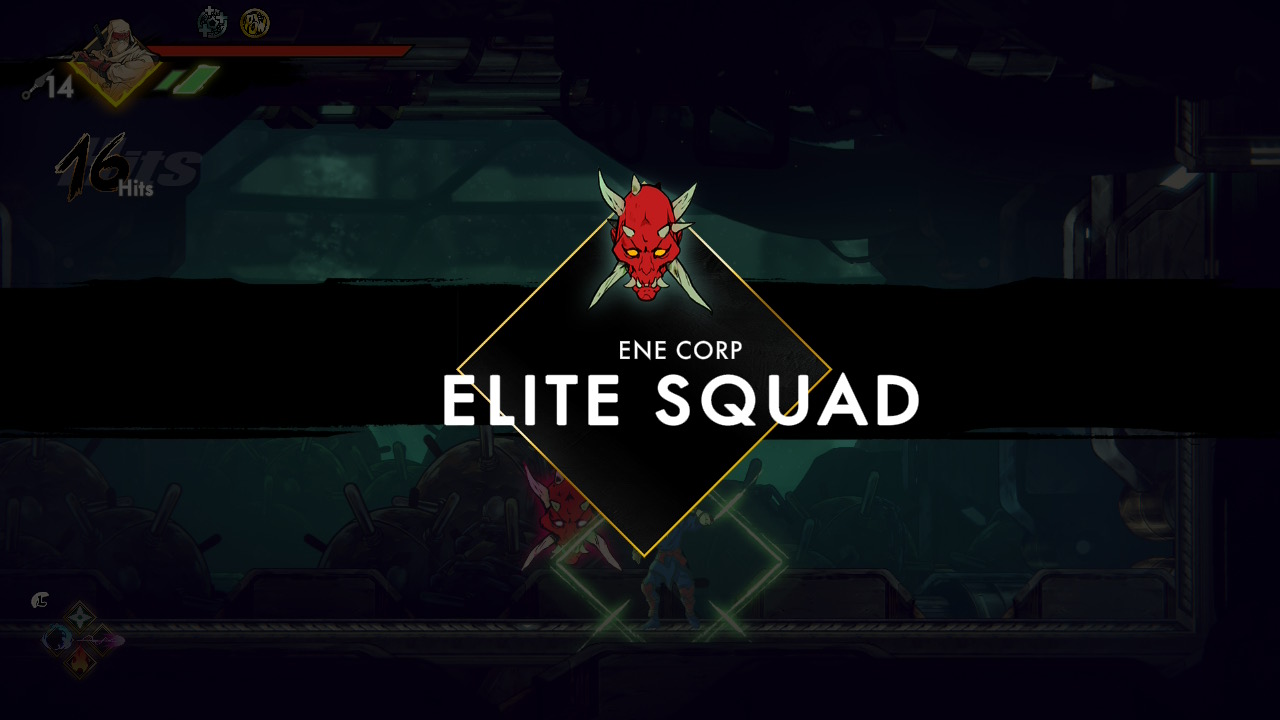
Where Shinobi excels is gameplay, stage design, and the small layers of mechanical nuance that enrich both. The core is faithful to classic Shinobi, yet the game expands the formula with metroidvania-style exploration. Traversing the interconnected stage network rewards you with upgrade materials, currency, and optional Elite Force encounters. These Elite Force units represent ENE Corp’s elite killers responsible for Musashi’s village massacre. They are essentially empowered variants of regular enemies, arriving in waves with increased durability and attack power. Clearing each Elite Force zone without dying grants an emblem, and collecting these emblems unlocks permanent upgrades or new techniques.
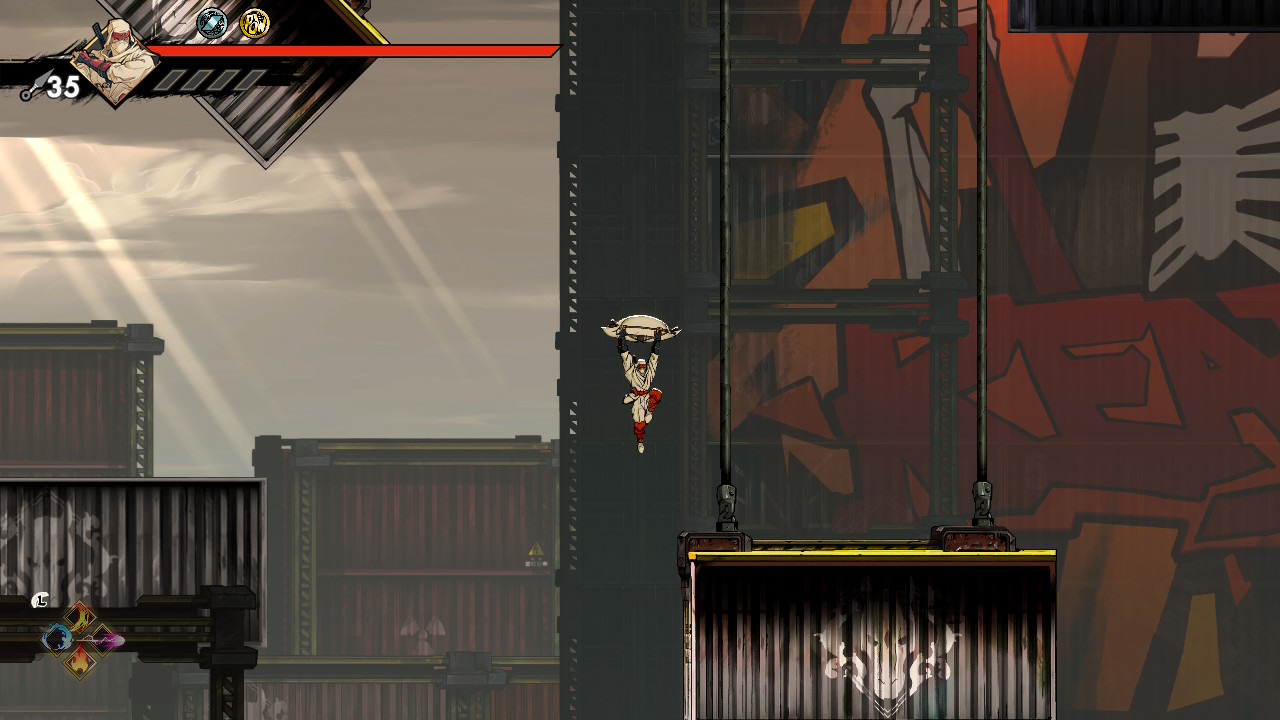
The game encourages revisiting previous stages with new abilities. A platform unreachable even with double jump becomes accessible once you acquire the Glide upgrade, and later the Grapple Hook adds even more vertical reach. The hook allows Musashi to latch onto fixed grapple points, swing across gaps, and chain movements that would be impossible otherwise. With both Glide and Grapple available, backtracking becomes faster, more expressive, and better aligned with the metroidvania loop of unlocking old spaces through newly earned mobility.
Shinobi also allows players to personalize Musashi’s appearance through unlockable costume variations. These cosmetic options don’t affect gameplay but reinforce the sense of ownership over the character as you progress through stages and collect upgrade resources.
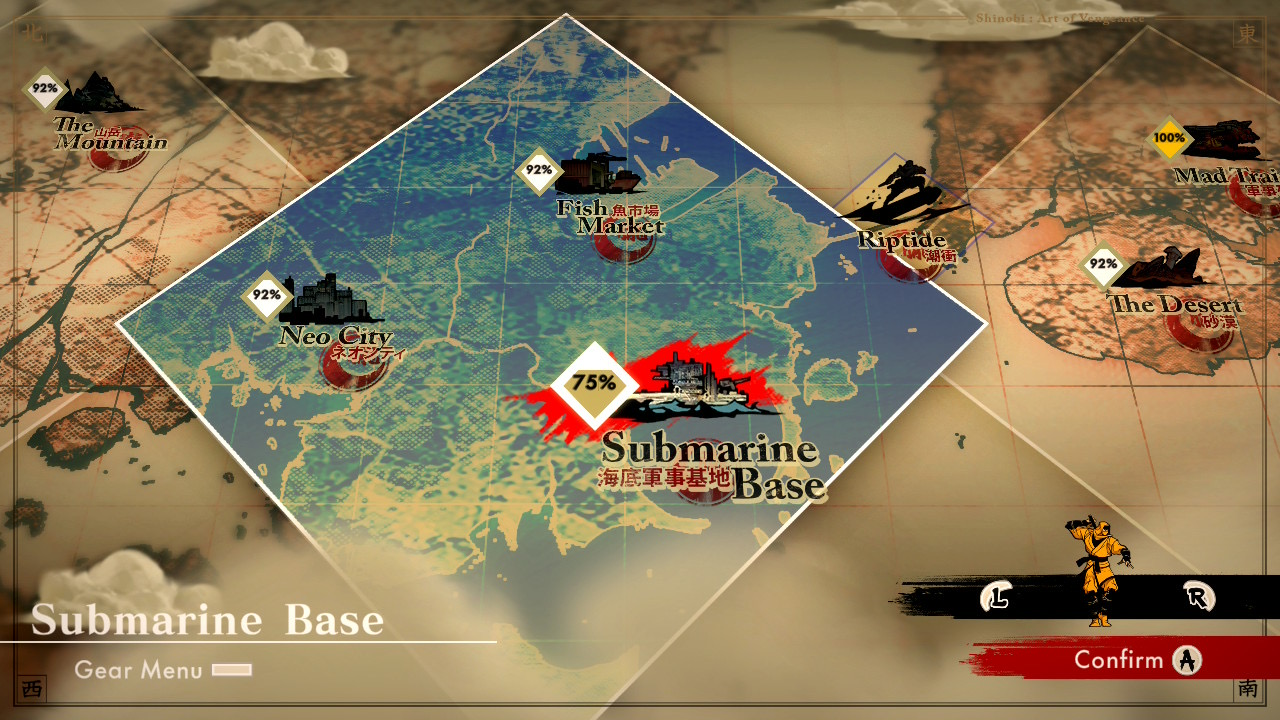
Unlike traditional metroidvanias, stages are not part of a single contiguous map. Instead, each area functions as a standalone stage selected from a world map once completed. This preserves the side-scrolling identity but limits the seamless exploration usually associated with the genre.
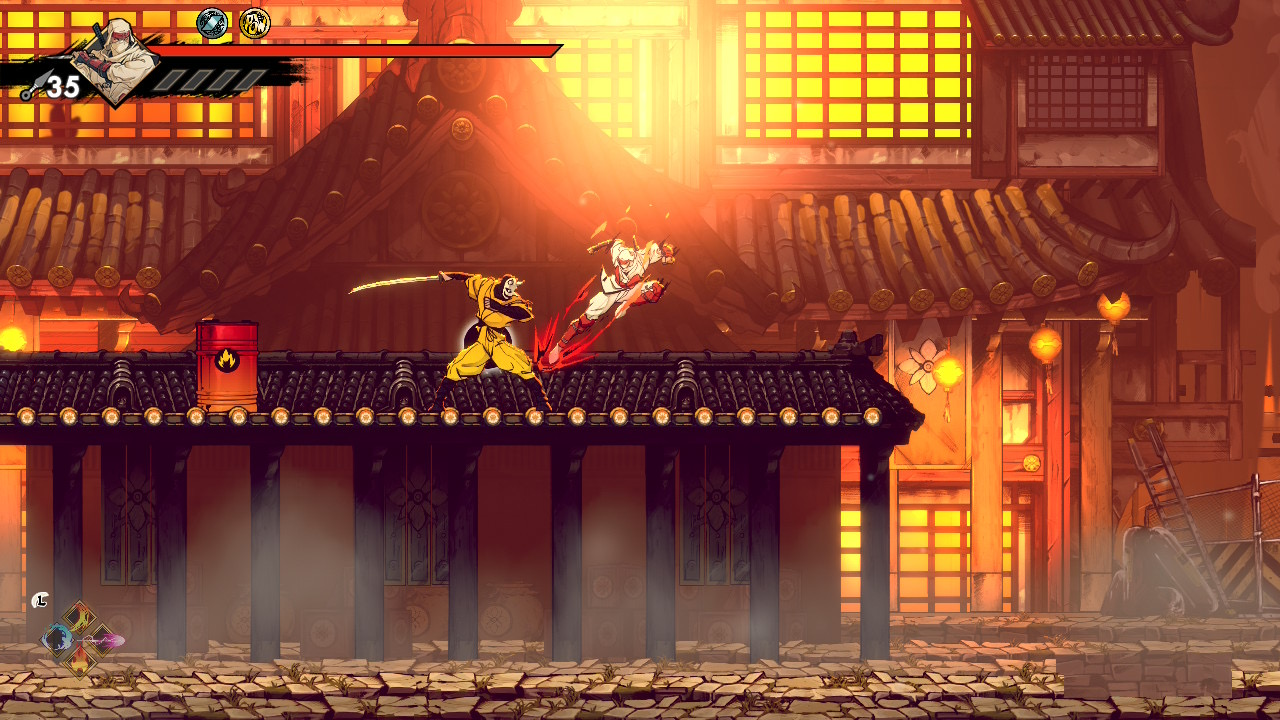
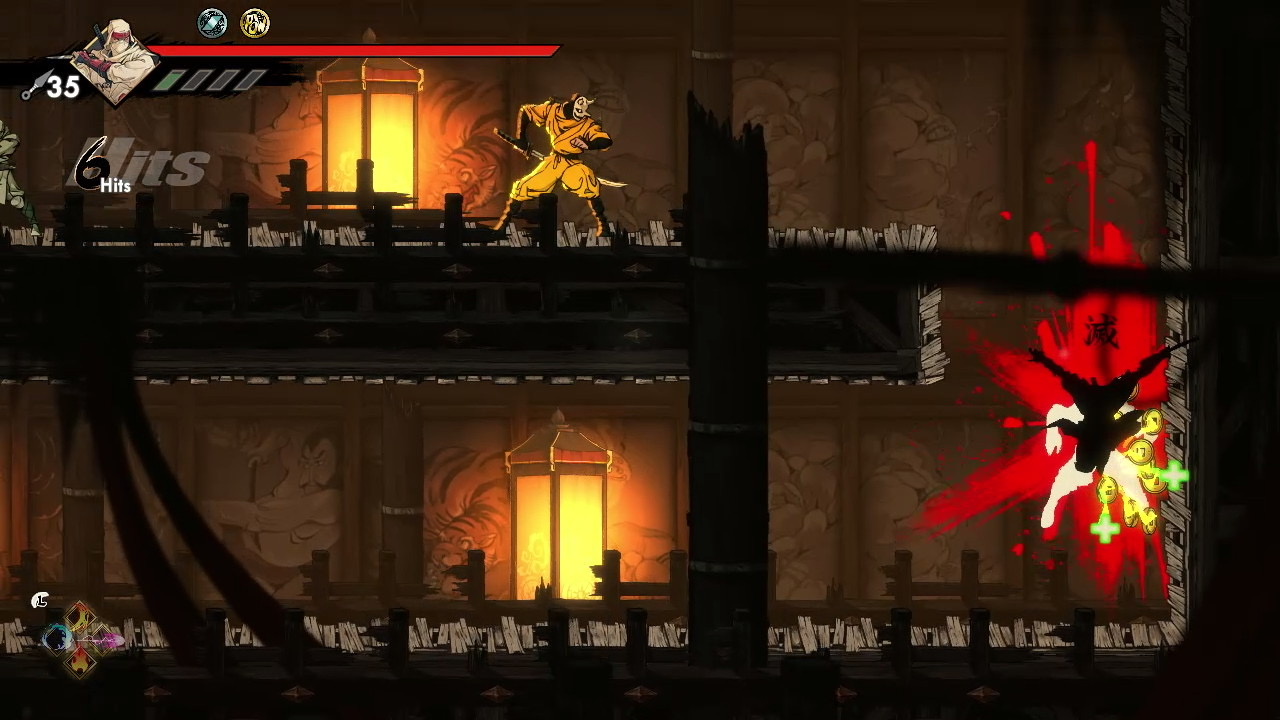
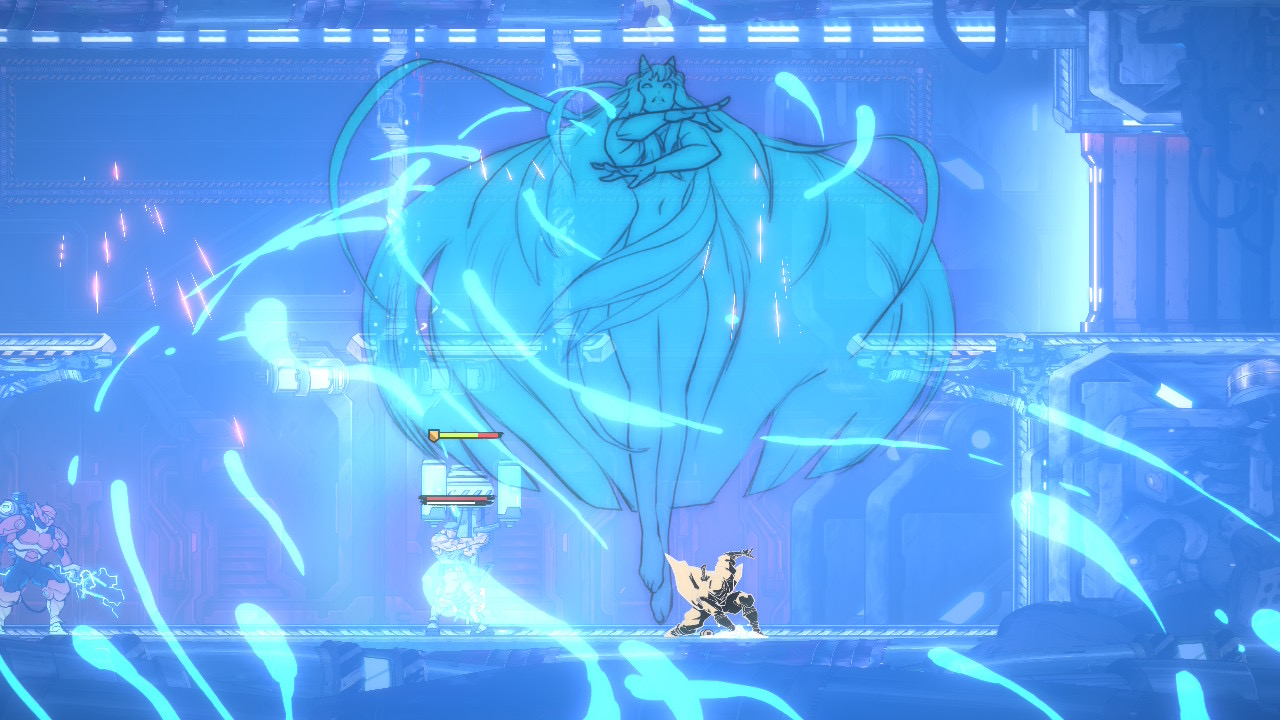
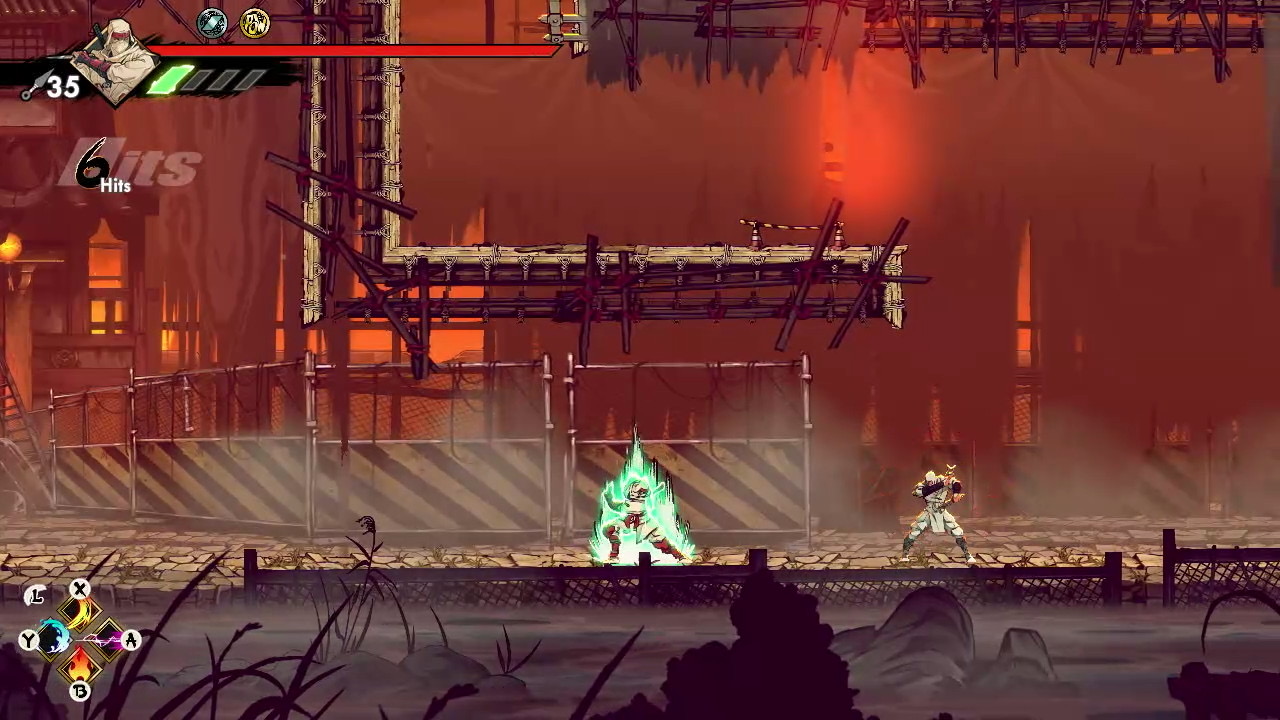
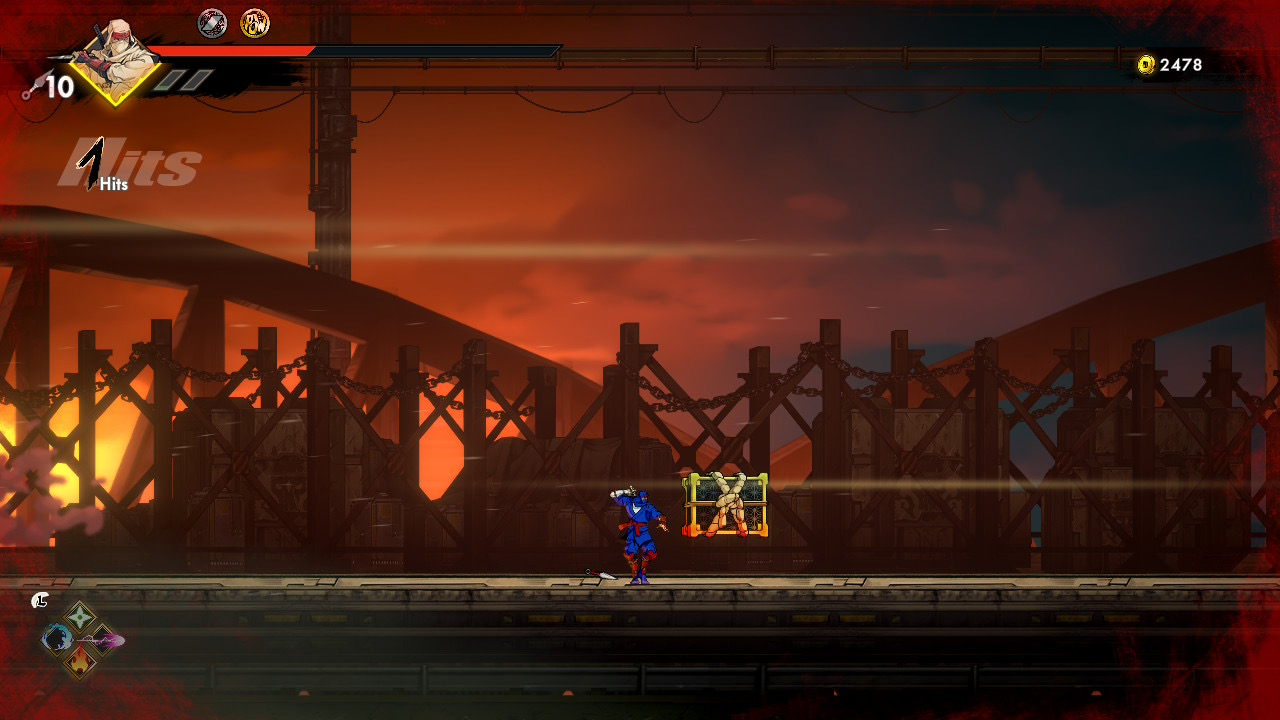
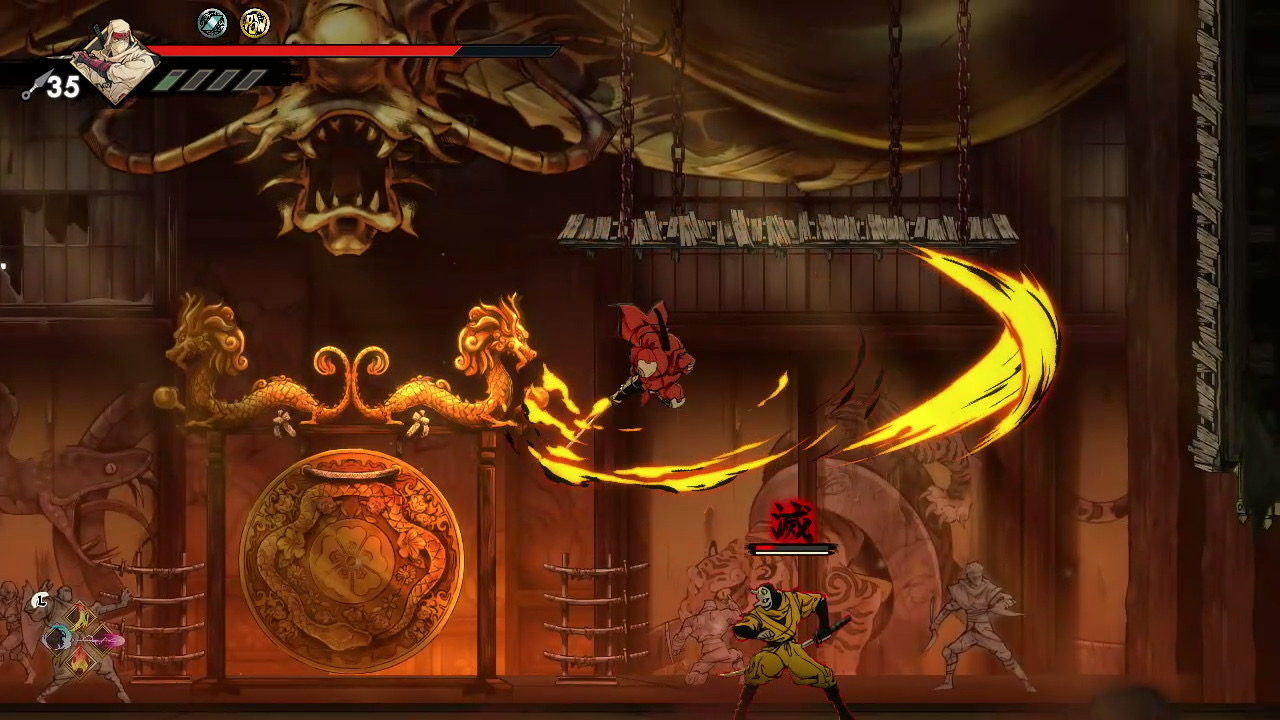
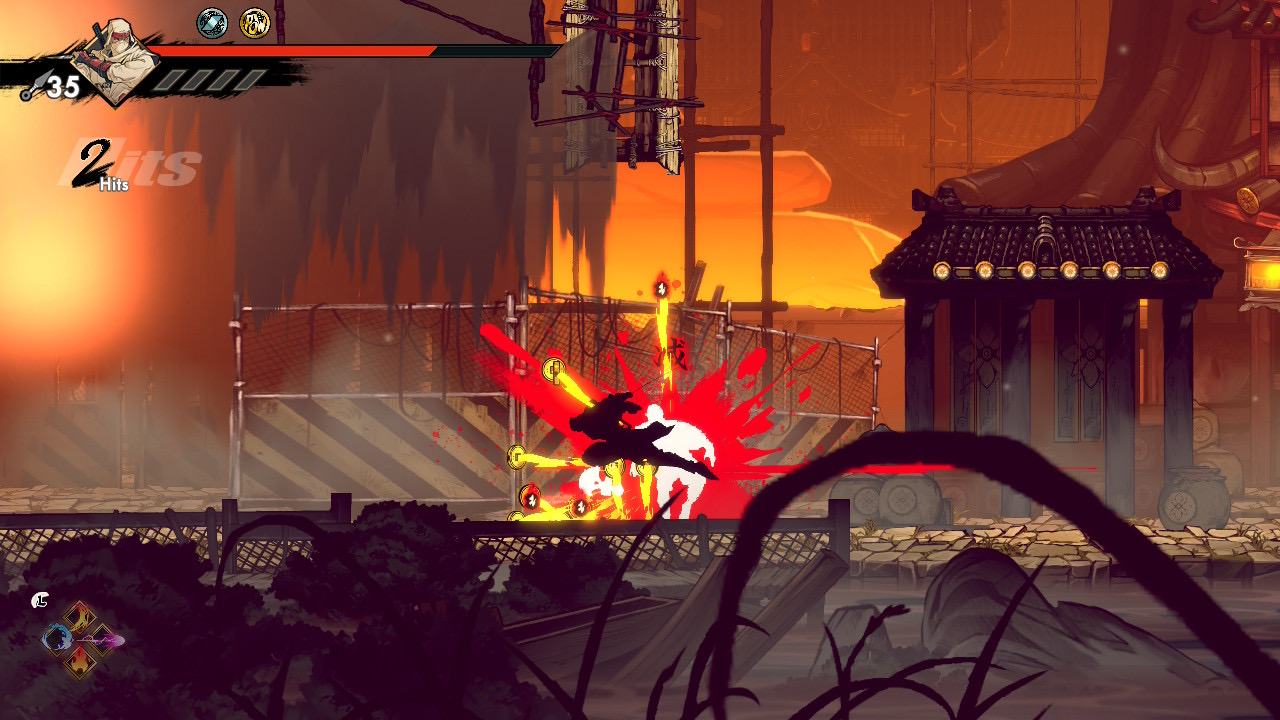
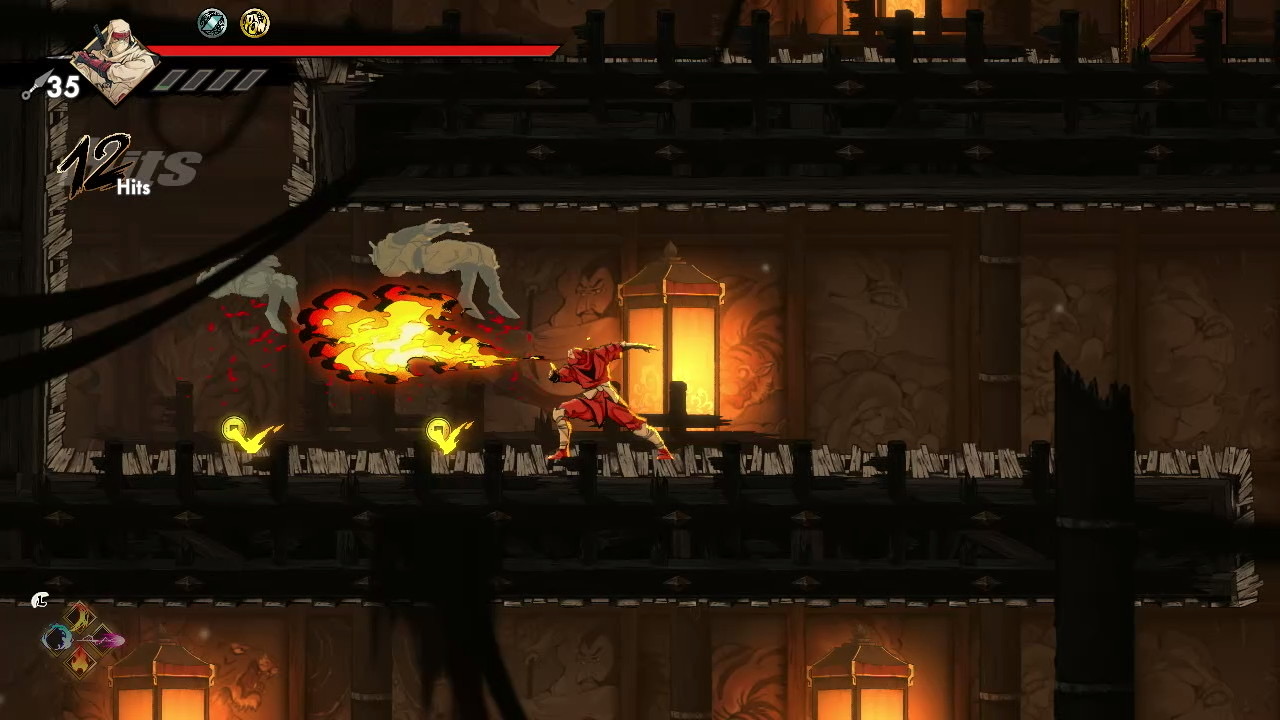
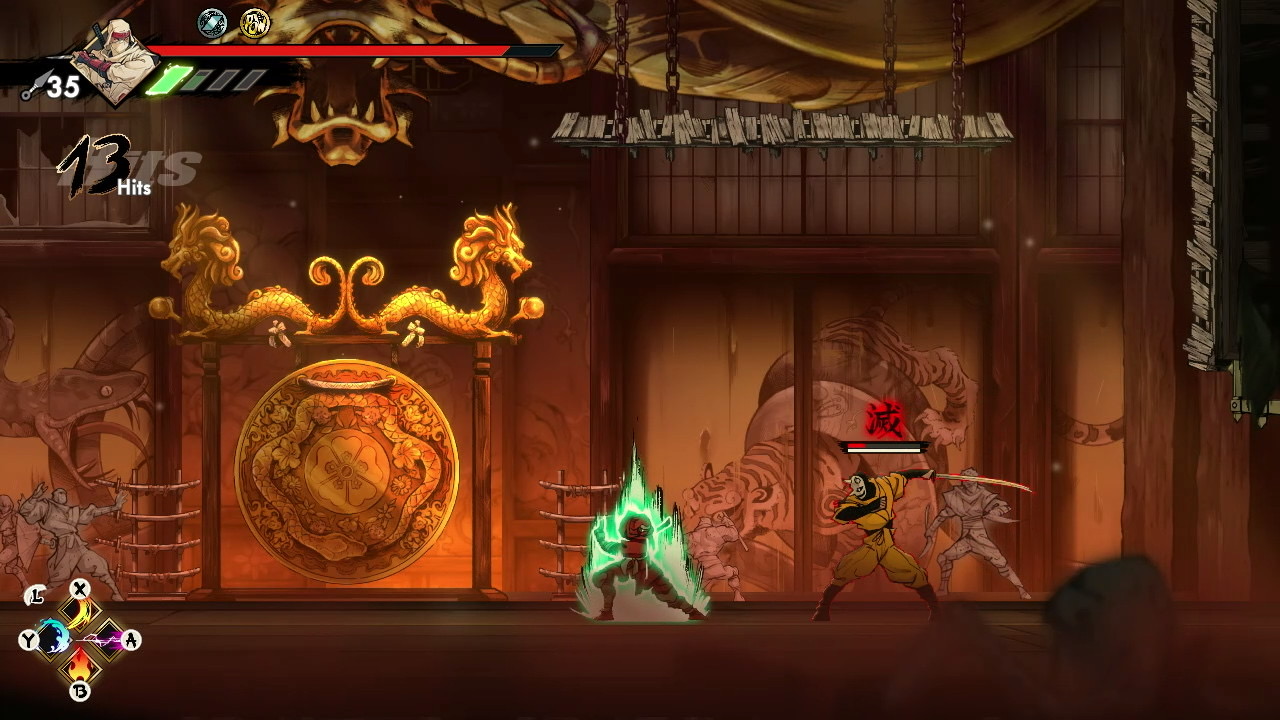
Combat is fast and varied. Musashi can chain light and heavy strikes, execute delayed stun attacks, throw shuriken, and unleash ninjutsu techniques using a stamina gauge. There are four core Ultra Ninjutsu abilities, adaptable to your situation: healing, burst damage, wide-area devastation, and more. They can be swapped at any time through the pause menu with no restrictions.
Talismans further expand builds by granting passive or active effects. Some shorten the execution time of powerful skills, others enhance stun potential, and many modify the properties of your ninjutsu. You can equip two at once and change them freely, allowing a flexible approach to combat and stage challenges.
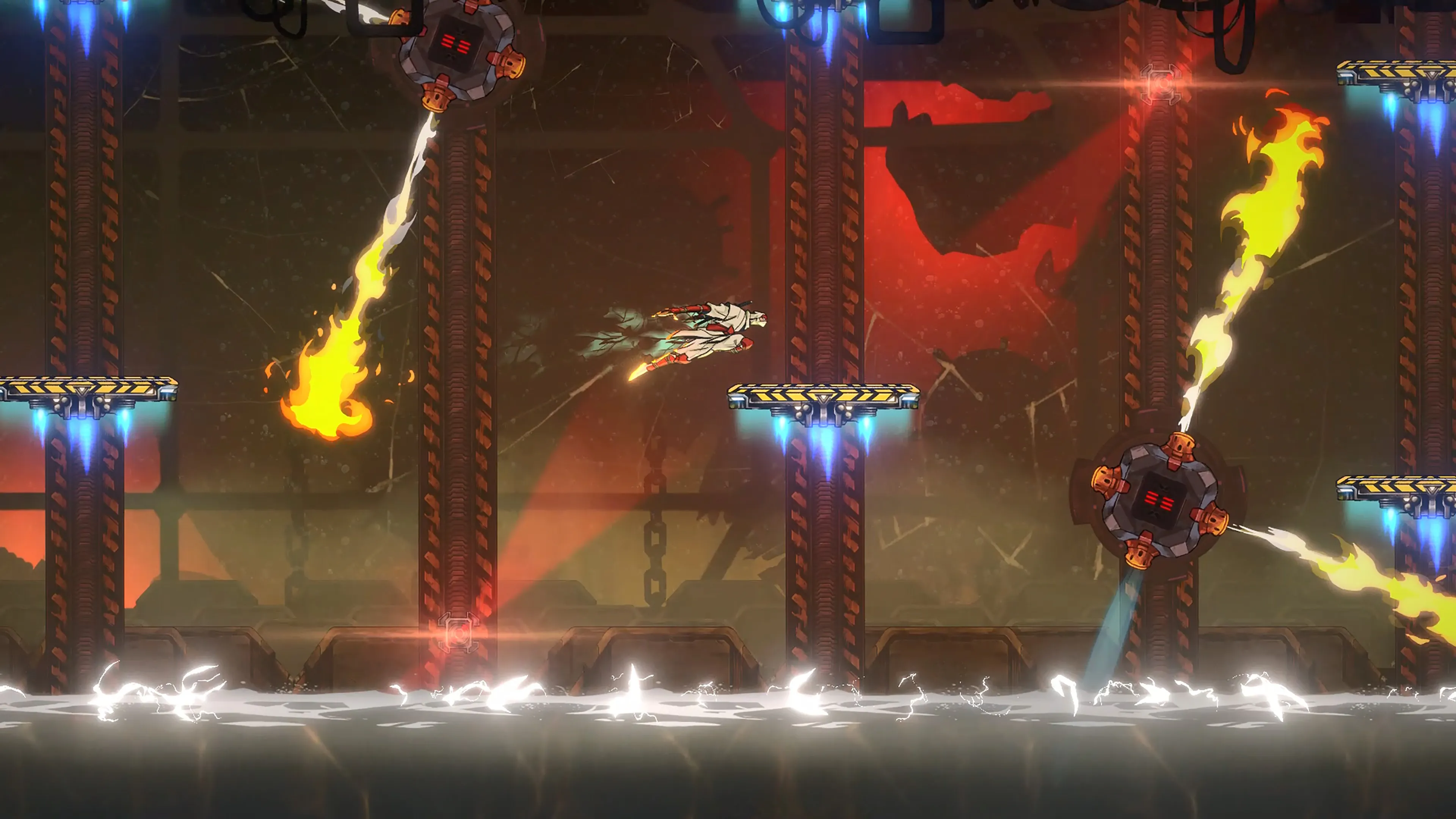
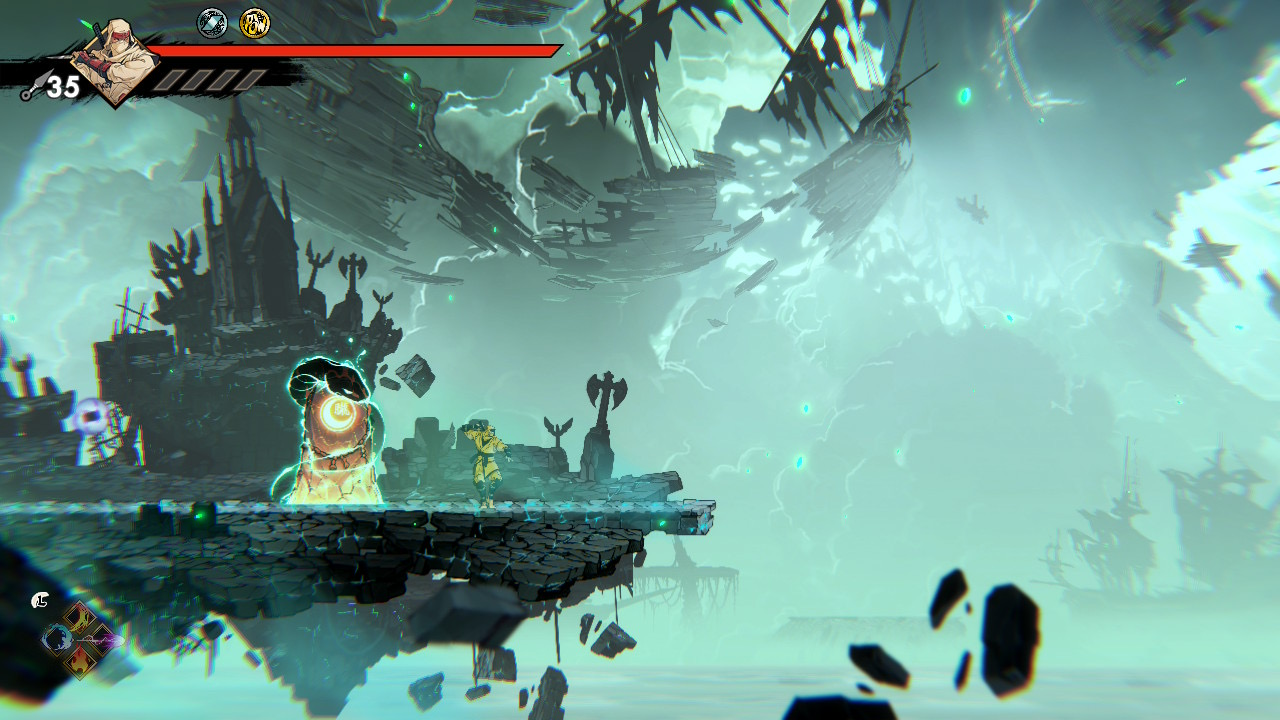
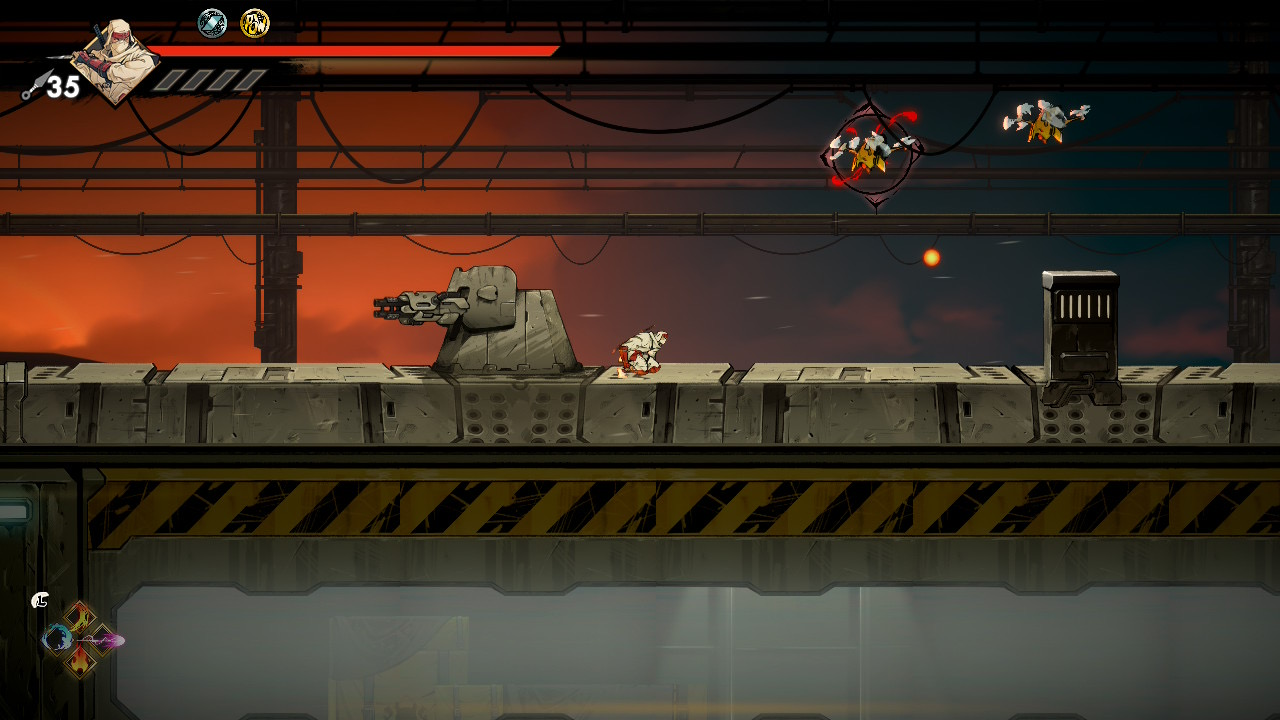
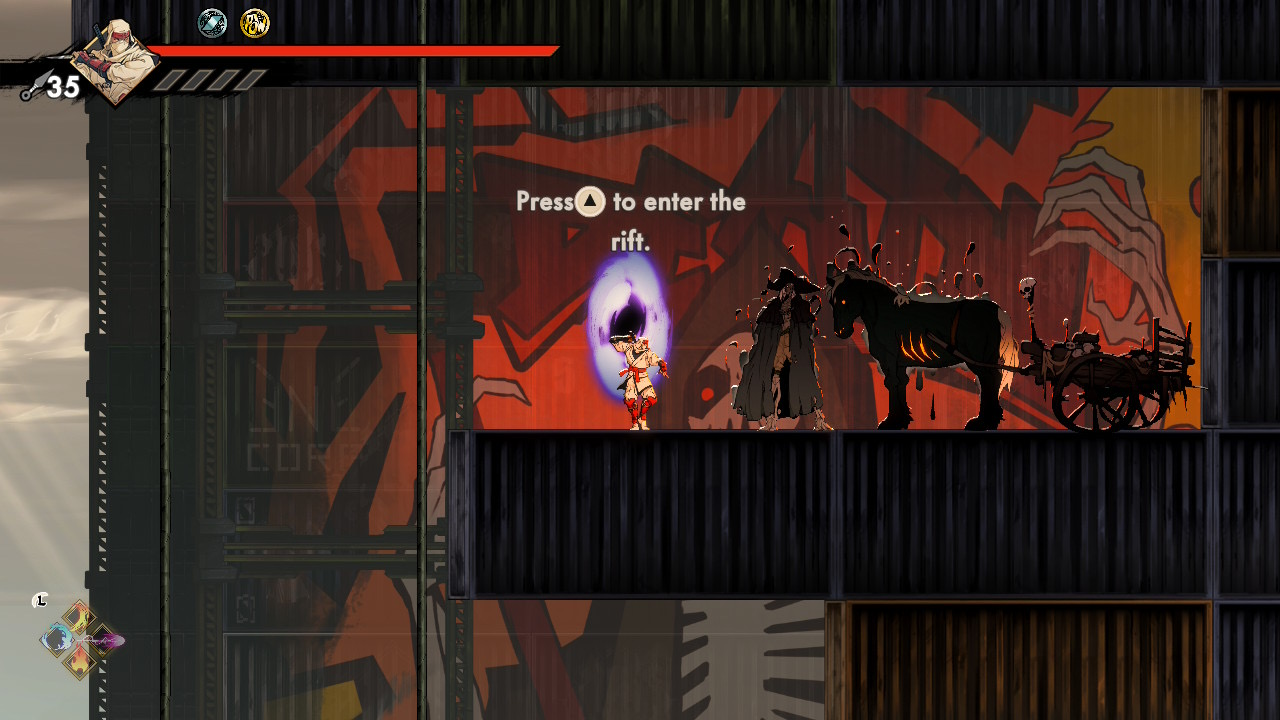
The platforming is deliberately demanding, echoing influences such as Celeste. Missing a jump or mistiming a dash respawns Musashi instantly at the last safe spot instead of pulling him back to a distant checkpoint. This accelerates learning, keeps the game’s pacing sharp, and prevents frustration. Checkpoints themselves act both as rest points and fast-travel anchors across stages. The toughest challenge segments, such as the Antou Rift platforms, rely heavily on this rapid respawn system.
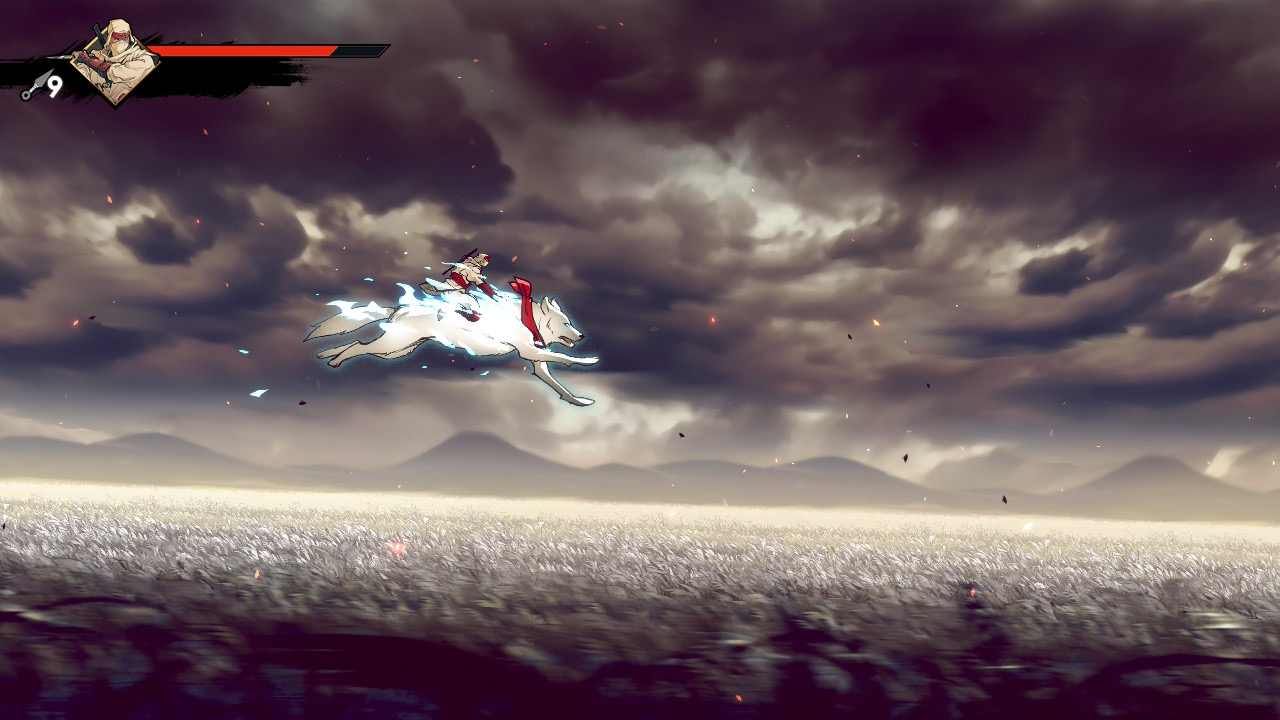
Each story arc includes optional alternative stages built around small gimmicks that break up the rhythm. One arc features a ride atop an oni fox, another has you crossing the sea on a speeding vehicle. These diversions are brief but keep the pacing from stagnating. Collectibles found in these areas feed back into your upgrade economy.
Shinobi: The Art of Vengeance is one of Sega’s standout titles this year and an essential experience for anyone who enjoys metroidvania-influenced platformers. It is not as intricate or deeply layered as something like Hollow Knight: Silksong, yet its replayability, fast movement, versatile combat, and striking art direction make it one of the genre’s strongest releases of the year. On Switch 2, the game runs without technical issues. It is also available across all major platforms.
Description
A fast, stylish classic "Shinobi" experience with excellent combat and visuals.Positives
- A varied and impactful combat system
- Fast, fluid movement paired with precise platforming layouts
- Strong sense of discovery that consistently motivates exploration
- High replayability
- OSTs that enhances atmosphere
Negatives
- Simplified narrative delivery
- Stage-based structure instead of a single continuous world map
- Limited customization options